Start with the full picture
Ask whether the number is gross or net, how often it is paid, and which regular costs or benefits sit beside it.
Pay & offers
Salary guides from official scales and our own adverts, with free tools for working out deductions and comparing offers.
1-5 of 5 guides

From 1 April 2026, Level 5 starts at R237,453 a year (R19,787.75 a month), Level 7 at R338,106 and Level 9 at R487,197. Here is every level from 1 to 12.
View pay guide
The national minimum wage is R30.23 an hour from 1 March 2026, the same for farm and domestic workers. On a 45 hour week that's R1,360.35 a week and R5,894.40 a month.
View pay guide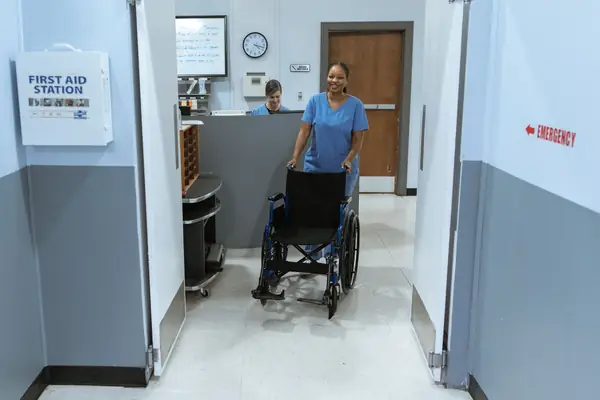
In government, from 1 April 2026, a nursing assistant starts at R15,102.50 a month, a staff nurse at R19,120 and a professional nurse at R28,113.25, before tax.
View pay guide
A newly qualified teacher with a REQV 14 qualification starts on R366,051 a year from 1 April 2026, which is R30,504.25 a month before tax.
View pay guide
The legal minimum learnership allowance runs from R455 a week for a learner's first 120 credits to R2,654.04 a week at NQF 5 to 8 with 481 to 600 credits, from 1 March 2026.
View pay guide1-5 of 5 guides
Before you accept
Ask whether the number is gross or net, how often it is paid, and which regular costs or benefits sit beside it.
A title alone is not a benchmark. Scope, seniority, working hours, location and responsibility change what a fair comparison means.
Clarify probation, review points, leave, medical cover, equipment, travel and the expectations that are not captured in one salary figure.
Before you resign or commit, make sure the role, pay, start date and key terms are clear in a document you can read carefully.
Use the offer conversation to decide with clarity, then find the next real opportunity.
Browse jobs